About
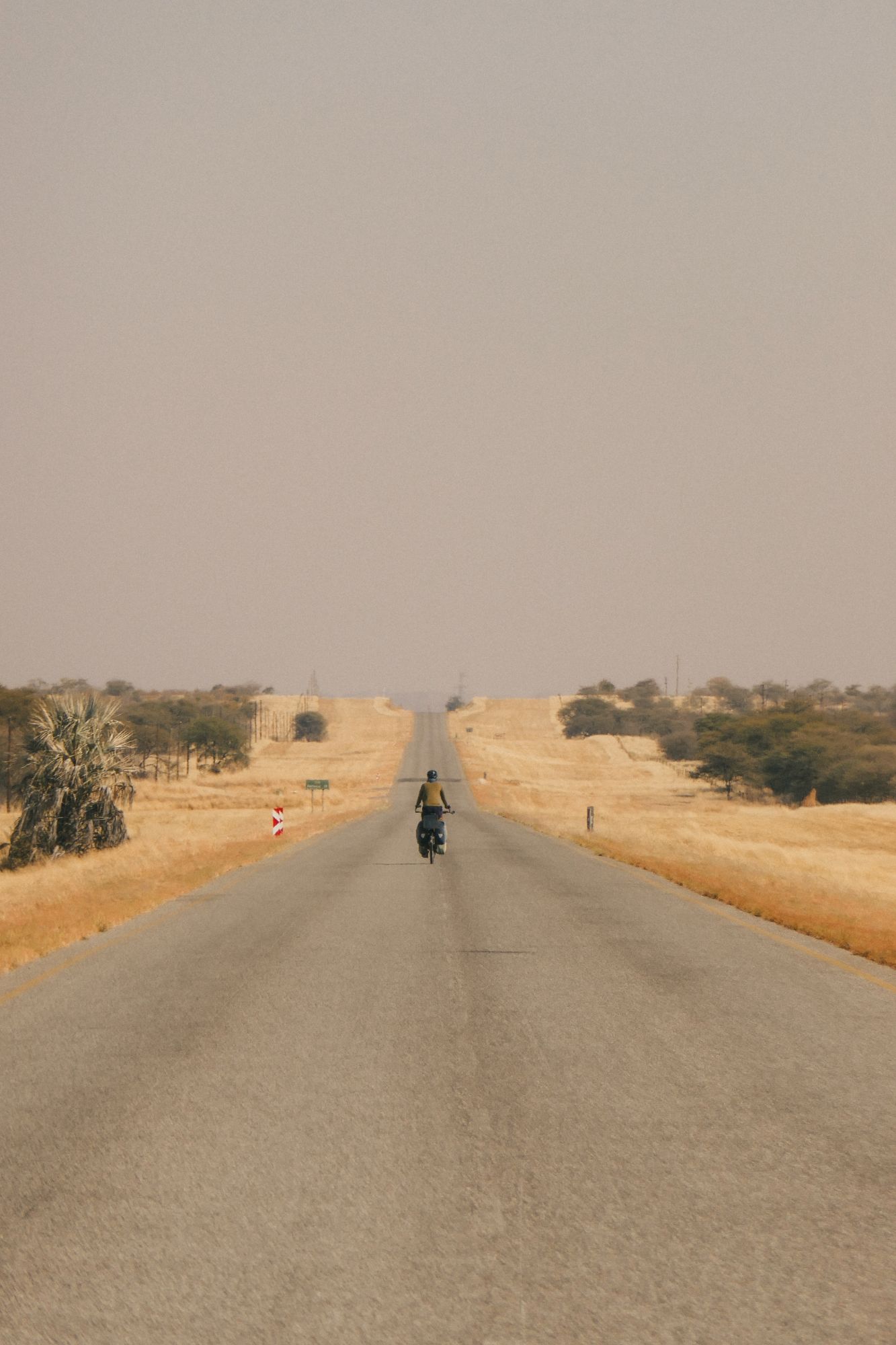
Namibia is a vast country, and most of its landscape is desert. With a population of 3 million people, you’ll ride in peaceful solitude most of the time! Sleeping outside is magical here; you’ll experience beautiful skies without any light pollution. It’s also home to Etosha National Park, a great destination to spot wildlife.

Geography
Most of Namibia is desert! It also features a rugged coastline, almost entirely protected as a national park with an epic name: the Skeleton Coast! Most of the country sits on a high central plateau, averaging around 1,000-1,600 meters in altitude. The terrain alternates between wide open plains and rockier, hillier stretches. The north of the country is very different: greener, less dry, and more populated.

Climate
Namibia is hella dry! Be prepared for chapped lips, dry hair, cracked hands… and the occasional dry-air-related nosebleed. Summer (Nov-Mar) features hot days, occasional thunderstorms, and temperatures can climb up to 35°C. Winter (May-Sept) is dry and sunny, with warm days and cold nights.
We cycled through in August and it was very, very windy! People even called it “windy season,” before the weather gets really hot again.

Visa
The visa costs N$1,600 for most EU passports, USA and Canada. You can get it on arrival, or you can speed up the process at the border by applying online in advance. Check your eligibility
Money
The local currency is the Namibian Dollar (N$). It’s pegged to the South African Rand, meaning N$1 = R1. You can pay in Namibian dollars or Rand interchangeably. Most shops accept cards, and you’ll find ATMs relatively easily.
SIM card
The only carrier in the country is MTC. It’s quite easy to buy a SIM card, although you’ll need to show your passport.
As of August 2026, 30GB of data (+150 SMS and 500 minutes of calls) costs N$290.

Food
Namibia is braai country! By the way, if you don’t know already, you’ll learn soon enough: braai means barbecue. Springbok sausage, beef T-bone, lamb chops, chicken wings… If it’s meat, you’ll find it! There isn’t much street food here, so most of your food will come from big supermarkets such as Checkers or Shoprite.

Water
Tap water is usually drinkable in bigger towns and cities. We almost never needed to use our filter or tablets. You can also buy purified water by the liter in some shops. Bottled water is also widely available in stores.
Accomodation
Campsites are beautiful here, and they often feature private ablutions and plenty of space. On the downside, they’re pretty expensive. The price is typically N$150-350 per person per night.
Hotels are relatively expensive too. Wild camping is surprisingly tricky! Although the country is nearly empty, most of the roads are fenced on both sides!


Roads
Most tarred roads are in good condition in Namibia. However, with the exception of the highways around Windhoek, they rarely have hard shoulders.
The country also has plenty of gravel roads, all with varying degrees of corrugation. Riding those roads sometimes feels like you’re dragging your bike down a staircase 🤣.
We have a bike touring setup, and it felt like we were too heavy for Namibian gravel roads. A bikepacking setup would probably be best for exploring this beautiful country.


People
Namibia is a diverse country and features at least 11 ethnic groups, the main one being the Owambo. Unfortunately, apartheid has left its mark, which you’ll probably see for yourself.

Language
Namibia has 8 national languages! But most people will understand and speak English with you.
Honest disclaimer
Bear in mind that Namibia is mostly desert, so be prepared to cycle long stretches of seemingly unchanging landscape, possibly for days.
Highlights
You’ll notice that some of the highlights mentioned below weren’t along our cycled route. We’ve also spent some time driving around Namibia, so we’ll include the highlights we visited by car, too. We’ll just mention them briefly, since there’s already plenty of info about these attractions online.
Etosha National Park (car only)
Etosha is Namibia’s #1 attraction. It’s a huge national park where you can see the Big Four (lion, leopard, elephant, rhino — but no buffalo, due to the dry climate). It’s more than 100km wide, and you can easily spend a few days exploring all the roads.
You can visit the national park on your own, without a guide. But bicycles are prohibited, so you’ll need a car. In our opinion, it’s really worth it if you’ve never done a safari before, and if you can afford it.
Be sure to fill up your tank before you enter, as there was no active petrol station as of July 2026, and this seems like an ongoing issue.


Spitzkoppe
Spitzkoppe is a group of beautiful granite peaks that dominate the landscape. Sunsets and sunrises are beautiful in this area, and it’s also popular for climbing and bouldering.

The Skeleton Coast
500km of desolate ocean coast, with eerie shipwrecks and whale skeletons.
The Fish River Canyon
The largest canyon in Africa!
Agate beach
Near Lüderitz, where you can look for agates on the beach. We also found shark teeth there!
Sossusvlei
Iconic red sand dunes, and the one spot with dead trees. If you see only one picture of Namibia, this is probably the one.
Kolmanskop
A ghost town swallowed by the desert.
Epupa Falls
Beautiful falls by the Angolan border
Our route
Our route doesn’t really include any of the highlights above (except Etosha), so we wouldn’t necessarily recommend following it 😅
Leave a Reply